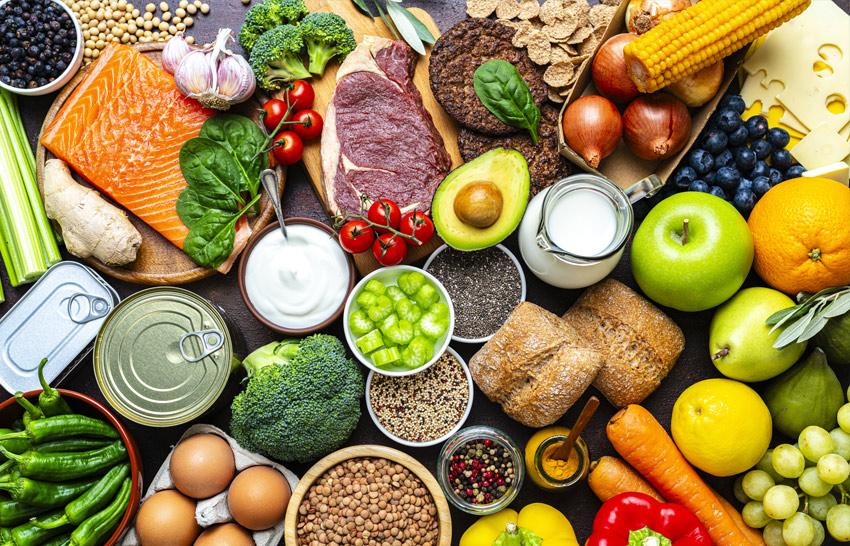
The importance of eating a nutritious diet has been the topic of much discussion over the last few decades. Advice to “eat healthy” is often given alongside generic advice such as “get enough sleep” and “exercise regularly.” When discussing the importance of healthy eating habits, it is important to consider the relative cost of eating a healthy diet to determine whether the average American can afford it.
The Food and Agriculture Organization (FAO) defines a healthy diet as one that is composed of a diverse range of foods across different food groups, contains adequate amounts of essential nutrients, is balanced in energy and macronutrient composition, and limits consumption of unhealthy compounds.1 According to the FAO, the cost of a healthy diet is the minimum amount of money needed to acquire a reference Healthy Diet Basket (HDB), which consists of the quantities of 11 foods from six major food groups that would meet all of an individual’s daily energy requirements (their caloric expenditure) and most micronutrient requirements.1 According to the United States Department of Agriculture (USDA), the estimated cost of maintaining a healthy, nutritionally adequate diet in the United States is approximately $8–$13 per person per day, depending on age, sex, and household size. These estimates are based on the USDA's Thrifty Food Plan, which demonstrates how nutritious meals can be prepared using affordable, commonly available foods.2 These numbers show that a nutritious diet can be achieved with $8-13 per day, but this would require that each food purchased is filling a specific dietary gap. That distinction is important because the USDA estimates represent a carefully planned, budget-conscious diet prepared at home, not necessarily the typical cost of healthy eating for most Americans.
The affordability of a healthy diet is a crucial public health issue because it holds major implications for mortality risk. In 2023, poor diets were associated with 12.2% of all deaths worldwide.3 Among diet-related causes of death, cardiovascular diseases were the most common. Cardiovascular disease risk is increased by high sodium consumption, often the result of a diet high in ultra-processed foods and insufficient consumption of fruits and vegetables.
The role of poor nutrition in the prevalence of non-communicable diseases is not solely the result of individual choices. Below, I will expound upon a few barriers that make eating a balanced diet challenging for portions of the population. Household income is a major factor determining the consumption of healthy diets. Low-income populations may be unable to afford nutritionally dense foods from the more costly food groups: meats, fruits, and vegetables. Additionally, physical access to both healthy and unhealthy foods must be considered. In recent decades, the advent of the local supermarket has vastly increased availability and lowered cost of nutritious foods. However, access to ultra-processed foods has concurrently expanded, leading to the development of food swamps, which are regions in which ultra-processed foods are in greater abundance than fresh, whole foods.4 People with limited time to cook meals from scratch may opt for highly processed foods for convenience. For example, potatoes are a whole food rich in fiber and many micronutrients. Purchased as packaged frozen French fries, however, they are depleted of their nutritional benefits and become a processed food high in sodium and added fats.
Food deserts, regions with severely limited access to full-service supermarkets within reasonable driving/walking distance, strongly hinder residents’ access to fresh fruits and vegetables. Low-income urban neighborhoods and the rural regions of the nation are most heavily affected. Residents are left with little choice but to choose processed foods that often do not meet their nutritional needs.
The difficulty many Americans experience in achieving a healthy diet is a complex and multifactorial issue. The most effective policy reforms will aim to change the driving factors responsible for the high cost of various components of a healthy diet as well as providing health education to affected communities. Interventions must also aim to build infrastructure to improve access to fresh fruits and vegetables in food deserts.
In summary, while it is true that a given healthy food such as an apple may be less expensive than a bag of chips, this does not accurately reflect the reality that many Americans face. Eating a healthy diet remains a challenge for many people, and the consequences of poor nutrition are reflected in our healthcare costs. Policies that lead to improvements in the ability of Americans to consume a healthy diet will lead to decreased national healthcare costs and reduction in mortality from chronic disease.