

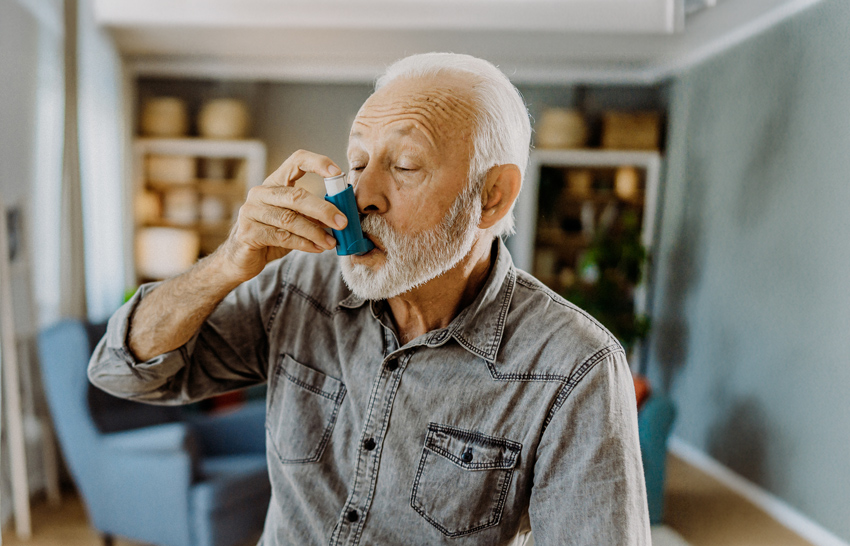
Chronic obstructive pulmonary disease (COPD) is a progressive lung disease and one of the leading causes of death in the United States.1-2 Beyond its impact on patients, COPD places a substantial financial burden on the healthcare system, with hospitalizations for exacerbations accounting for the largest share of disease-related costs.3 Despite this enormous clinical and financial burden, much of COPD care remains focused on managing exacerbations after they occur rather than preventing them. Accordingly, preventing exacerbations represents one of the greatest opportunities to improve patient outcomes while lowering healthcare costs. A recent study published in the journal Chronic Obstructive Pulmonary Diseases highlights how pharmacist-led inhaler education can substantially improve inhaler technique, a critical step toward reducing exacerbations that are the primary driver of COPD-related hospitalizations and healthcare costs.4
The study included over 1,800 Medicare Advantage beneficiaries with COPD using one of six common inhaler devices and evaluated whether a telephone-based teach-to-goal (TTG) education program could improve inhaler technique. Pharmacists delivered two structured telephone education sessions, approximately 60 days apart, that combined assessment, personalized inhaler instruction, and repeated coaching until patients demonstrated correct inhaler technique. At baseline, nearly 40% of patients demonstrated incorrect inhaler use. Following the first education session, inhaler misuse fell to 6.9%, with additional improvements observed after the second session. These findings suggest that the intervention and repeated reinforcement helped patients sustain proper inhaler technique. However, although the TTG intervention improved inhaler technique across all devices, the magnitude of improvement varied by inhaler type, likely because some inhalers are more challenging to use correctly than others.
This study demonstrates that pharmacist-led, telephone-based inhaler education can be delivered at scale without requiring in-person visits. Traditionally, TTG inhaler education relies on in-person or video encounters that allow educators to observe inhaler technique, identify errors, and provide real-time corrective feedback. The success of this telephone-based adaptation suggests that improvements in inhaler technique can be achieved even without direct visual observation. By improving inhaler technique across a large and diverse Medicare population, the study highlights the measurable clinical value pharmacists bring to chronic disease management. It also provides a scalable and accessible model for health plans and healthcare systems to improve care quality while reducing costs associated with poor inhaler use.
Author bio:
Kyle M. Sousa, PhD
Dr. Sousa is a Professor of Pharmaceutical Sciences and currently serves as the Dean of the School of Pharmacy. His research interests include pharmacy workforce sustainability and approaches towards enhancing professional advocacy.
References:
- Weeks JD, Elgaddal N. Chronic obstructive pulmonary disease in adults age 18 and older: United States, 2023. NCHS Data Brief. 2025 May;(529): 1–9.
- Boers E, Barrett M, Su JG, Benjafield AV, Sinha S, Kaye L, Zar HJ, Vuong V, Tellez D, Gondalia R, Rice MB, Nunez CM, Wedzicha JA, Malhotra A. Global Burden of Chronic Obstructive Pulmonary Disease Through 2050. JAMA Netw Open. 2023 Dec 1;6(12): e2346598
- Mannino DM, Roberts MH, Mapel DW, Zhang Q, Lunacsek O, Grabich S, van Stiphout J, Meadors BL, Feigler N, Pollack MF. National and Local Direct Medical Cost Burden of COPD in the United States From 2016 to 2019 and Projections Through 2029. Chest. 2024 May;165(5): 1093-1106.
- Press VG, Katsikas A, Swankoski K, Boudreau E, Thomas E. Phone-based teach-to-goal inhaler education program for Medicare advantage beneficiaries with COPD. Chronic Obstr Pulm Dis. 2026; 13(2): 84-92.