

Type 1 diabetes (T1D) is a serious life-long chronic illness requiring diligent monitoring of glucose levels and real-time adjustment of medication in response to rapidly changing conditions. Everyday activities need to be planned carefully according to glucose trends to avoid the threat of hypo-and hyperglycemia (i.e. too little or too much sugar in the bloodstream, respectively). Despite recent technological advances, such as continuous glucose monitoring devices connected with insulin pumps, patients continue to struggle with the high cognitive load needed to stay in range. Managing T1D is a 24/7, 365 days per year job that knows no breaks and requires the highest level of self-care commitment. Even well-controlled patients tend to experience selfcare burnout at some point along their journey, especially when facing diabetes complications and reduced life expectancy. Although diabetes technology reduces patient workload and increases time in range when optimally utilized, it lacks the precision of healthy or replaced pancreatic islet cells.1 Therefore, the hope for a functional cure—insulin independence—has carried patients for decades.
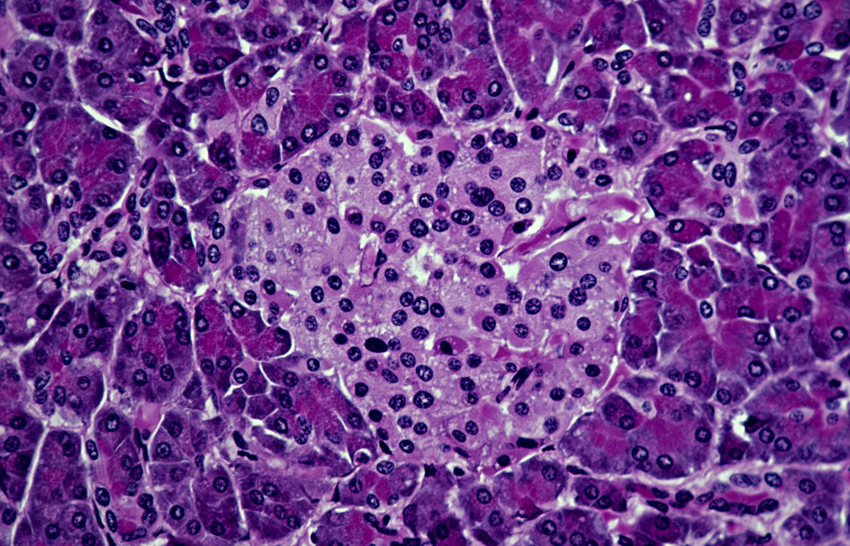
Approximately 2.1 million people in the U.S. are living with diagnosed T1D.2 In contrast to Type 2 diabetes, which is primarily characterized by metabolic stress and insulin resistance, T1D is an immune mediated condition in which patients lack the functioning cells that produce the life-sustaining hormone.3 Insulin is normally produced by specialized beta cells located within clusters called the Islets of Langerhans.4 These islets are scattered throughout the pancreas and act as “micro-organs” that regulate blood glucose. As a result of the disruption or loss of insulin-producing beta cells, insulin must be delivered externally via multiple daily injections or by an insulin pump. Currently, this is the standard of care.
For decades, researchers have studied the possibility of harvesting islets from deceased donors and transplanting them into insulin-dependent diabetic patients.5 Animal studies were conducted as early as the 1960s and established islet cell isolation and transplantation as proof of concept. In 1988, the Ricordi chamber, a technique that automated and substantially improved islet cell harvesting, made islet cell transplantation relevant to the clinical level.6 The first successful human to human (allogeneic) islet cell transplantation that achieved prolonged insulin independence followed two years later.7 In 2000, the Edmonton trial delivered a much celebrated breakthrough with a widely adopted protocol that used steroid-free immunosuppression and standardized the procedure.8 The first and currently only FDA-approved islet cell therapy, Lantidra (CellTrans), transitioned from the clinical trial phase to a biologic product in 2023.9 It is an allogeneic islet cell transplant injected through the portal vein and requiring life-long immunosuppressants.Recent advances have brought a new era of innovation highlighted by Vertex Pharmaceuticals’ allogeneic stem-cell derived islet therapy.10 Other studies specifically target immunomodulation strategies. These include the most recent testing of the Eledon Pharmaceuticals’ anti-CD40L antibody Tegoprubart that has shown a significant reduction in the toxic side effects that patients experience with conventional immunosuppression drugs.11 The Eledon trial showed 100% insulin independence in 10 of 12 patients 4 weeks after transplantation with no signs of graft rejection or measurable formation of graft-targeting antibodies.
While research is sprawling in the United States, islet cell transplantation faces a distinct obstacle. Currently, human cadaveric pancreatic islets are regulated by the Food and Drug Administration (FDA) as “biologicals.” Under FDA rules, islets must meet stringent pharmaceutical manufacturing standards designed for therapeutic drugs and, as such, are required to undergo biologics licensing.12,13 However, as living micro‑organs, islets are made up of natural variations, making drug‑style regulation costly and difficult for transplant programs. By contrast, other organs, such as kidneys and whole pancreas transplants, are regulated through the Health Resources and Services Administration (HRSA). HRSA oversees the Organ Procurement and Transplantation Network (OPTN), a system that provides a national framework for policies that guide organ donation, transplantation, outcome monitoring, and long-term follow-up. As a result of this apparent mismatch of islets as biologicals, islet cell transplantation in the U.S. is unavailable to most Americans and remains confined to research settings.13
The ISLET Act (Increase Support for Life-saving Endocrine Transplantation) aims to reclassify human cadaveric islets to be considered “organs” rather than drugs, moving regulatory oversight from the FDA’s drug licensing framework to HRSA/OPTN’s transplant framework. The federal bill S. 3105-ISLET Act amends the Public Health Service Act by including human cadaveric islets as transplantable organs.14 It was introduced in the 119th Congress on November 5, 2025, by Senator Mike Lee (R-UT, primary sponsor) and Senator Ted Budd (R-North Carolina, original Senate co-sponsor) and referred to the Committee on Health, Education, Labor, and Pensions where it is under review at the time of writing. A related companion bill, H.R. 8018-ISLET Act, was introduced to the House of Representatives by Rep. Norman Ralph (R-SC-5) on March 19, 2026, and referred to the House Committee on Energy and Commerce.15 Considering strong indicators that U.S. policy will follow the lead of other countries’ organ transplant frameworks, the Pancreas Transplantation Committee at HRSA is conducting preliminary policy discussions about islet cell transplant allocation and distribution to facilitate fair and efficient take-up. Although the availability of deceased donor tissue will remain limited, it would allow patients who meet eligibility criteria to be afforded a functional cure. Medical experts, T1D support groups, and the public overwhelmingly support the ISLET Act.
Islet cell transplantation does not come without risks. The use of life-long immunosuppressants to prevent transplant rejection comes with its own challenges. Currently, only patients who experience severe hypoglycemia, hypoglycemia unawareness, and substantial glucose variability qualify for participation in selected clinical trials not covered by health insurance plans. As research progresses particularly in immunomodulation and access to islet cell therapy improves by easing regulatory barriers, the highly anticipated functional cure for all patients living with T1D may become a reality in the not-too-distant future.
Author Bio
Christiane Schubert, PhD
Dr. Schubert is an Assistant Professor of Medical Education at the School of Medicine. Her research interest is in human factors and ergonomics in healthcare and includes naturalistic decision-making, the development of expertise, resilience engineering, and the work systems of patients and family caregivers.
Dr. Schubert is an Assistant Professor of Medical Education at the School of Medicine. Her research interest is in human factors and ergonomics in healthcare and includes naturalistic decision-making, the development of expertise, resilience engineering, and the work systems of patients and family caregivers.
References:
- Rickels, M. R., Ballou, C. M., Foster, N. C., Alejandro, R., Baidal, D. A., Bellin, M. D., et al. (2025). Iselt cell transplantation versus standard of care for Type 1 diabetes complicated by severe hypoglycemia. From the collaborative Iselt Transplant Registry and the T1D Exchange Registry. Diabetes Care, 48(5), 737-744.
- CDC National Diabetes Statistics Report. January 21, 2026. https://www.cdc.gov/diabetes/php/data-research/index.html/ Accessed April 20, 2026.
- Eizirik, D. L., Pasquali, L. & Cnop, M. (2020). Pancreatic beta cells in Type 1 and Type 2 diabetes mellitus: different pathways to failure. Nature Reviews Endocrinology, 16, 349-362.
- Da Silver Xavier, G. (2018). The cells of the Islets of Langerhans. Journal of Clinical Medicine, 7, 54; doi:10.3390/jcm703054.
- Tondin, A. R., & Lanzoni, G. (2025). Iselt cell replacement and regeneration for Type 1 diabetes: Current developments and future prospects. BioDrugs, 39, 261-280.
- Piermonti, L., & Pileggi, A. (2013). 25 years of the Ricordi automated method for islet isolation. CellR4 Repair Replaceable Regen Reprogram, 1(1), e128. PMID: 30505878.
- Ricordi, C., & Strom, T. B. (2004). Clinical islet transplantation: Advances and immunological challenges. Nature Reviews, 4, 259-267.
- Shapiro, A.M.J., Lakey, J.R.T., Ryan, E. A., Korbutt, G. S., Toth, E., Warnock, G. L. et al. (2000). Islet cell transplantation in seven patients with type 1 diabetes mellitus using a glucocorticoid-free immunosuppressive regimen. New England Journal of Medicine, 343(4), 230-238.
- FDA News Release, June 28, 2023. FDA approves first cellular therapy to treat patients with Type 1 diabetes. https://www.fda.gov/news-events/press-announcements/fda-approves-first-cellular-therapy-treat-patients-type-1-diabetes. Accessed April 20, 2026.
- Reichman, T. W., Markmann, J. F., Odorico, J., Witkowski, P., Fung, J. J., Wijkstom, M., et al. (2025). Stem-cell derived, fully differentiated islets for Type 1 Diabetes. New England Journal of Medicine, 393(9), 858-568.
- Eledon Pharmaceuticals (March 16, 2026). Eledon announces updated data from investigator-initiated islet cell transplant trial of Tegoprubart in patients with Type 1 Diabetes at UChicago Medicine. Globe Newswire. https://ir.eledon.com/node/11066/pdf Accessed on April 20, 2026.
- Witkowski, P., Philipson, L. H., Buse, J. B., Robertson, R. P., Alejandro, R., Bellin, M. D., et al. (2022). Islets transplantation at a crossroads-Need for urgent regulatory update in the United States: Perspective presented during the scientific sessions 2021 at the American Diabetes Association Congress. Frontiers in Endocrinology,12, January. Doi10.3389/fendo.2021.789526.
- Wikowski, P., Wojcik, N., Appelbaum, N., Fung, J. J., Barth, R. N., & Ricordi, C. (2025). Demise of cadaveric islet transplantation in the USA: Quo Vadis, 1 year after BLA approval and 24 years after the Edmonton breakthrough? Frontiers in Transplantation, 30, January. DOI 10.3389/frttra.2025.1491568.
- ISLET Act, S. 3105, 119th Cong. (2025).
- ISLET Act, H.R. 8018, 119th Cong. (2026).