

The United States is a massive, fluid mosaic of legislative and political actions that encompasses a federal republic made up of 50 states, each with its own government, laws, and constitution, under one national Constitution. But in this political patchwork quilt, one matter has yet to be definitively legislated anywhere: the use of sex selection in the process of fertility treatments. While the twentieth and twenty-first centuries have seen legal case after case addressing sexual and gender discrimination of adult human beings, the issue of sexual and gender selection of human embryos has yet to be meaningfully addressed.
For historical context, the first known human embryo to be created outside the womb was reported in 1965, when Dr. Robert Edwards of Cambridge University created the first human embryo in a lab1. Thirteen years later in 1978, through the process of in-vitro fertilization (IVF), Dr. Edwards and his partner Dr. Patrick Steptoe implanted the first embryo fertilized outside of the womb to result in a successful pregnancy and live birth2. The resulting child was named Louise Joy Brown and she was heralded as the world’s first “test tube baby.”3 IVF technology quickly proliferated and the first child born through the process in the United States was Elizabeth Carr in 1981.4
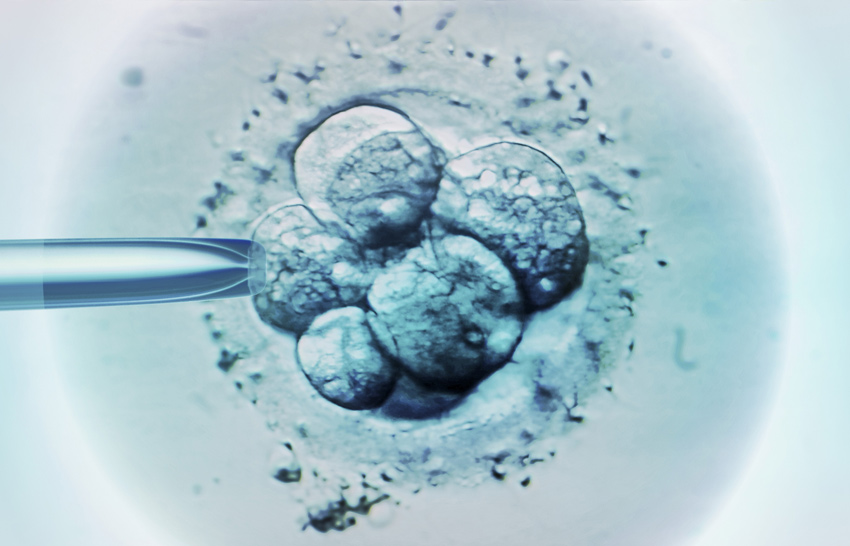
The early cases of IVF focused simply on achieving a live birth of any kind, but by the 1990s, sex-selection of embryos through the technique of preimplantation genetic diagnosis (PGD) became available.5 The original intent of utilizing PGD for sex selection was not to express a preference for a male or female child, but simply to assist prospective parents in avoiding implanting an embryo that would result in a child with a sex-linked disorder such as Duchenne muscular dystrophy or Fragile X syndrome.6 While the intention behind the technology was to assist in mitigating disease and suffering amongst newborn babies, the very practical reality of the technology was that it allowed endocrinologists to examine an embryo and determine if it would have an XX or XY presentation, or, more simply put, tell would-be parents which embryos would result in a boy or a girl.
Another technology known as MicroSort® became available in 1990, and this technique could separate semen samples by weight into sub-samples that contained predominantly XX or XY sperm. The advent of this technology allowed prospective parents to increase their chances of achieving their desired sex outcome through intrauterine insemination (IUI) or through IVF.8
MicroSort® provided a cheaper and far less invasive, though slightly less reliably accurate, method for obtaining the desired sex of a fetus.9
MicroSort®, along with PGD, ushered in a new era of reproductive technology where parents could theoretically create their ideal ratios of male and female offspring prior to conception, offering both medical hope to desperate parents seeking to avoid sex-linked medical disorders and a less morally troubling alternative to parents who may have previously considered sex-based selective abortion. But these two technologies also ushered in a new era in ethical debate over the moral acceptability of sex selection of embryos.
By 1999, the Ethics Committee of the American Society of Reproductive Medicine concluded that while preimplantation sex selection is appropriate to avoid the birth of children with sex-linked genetic disorders, the use of sex selection simply as a matter of preference should be discouraged.10 Yet, in spite of the ethical admonition against sex-based selection of embryos on the basis of gender preference by their own professional society, many reproductive endocrinologists continued actively marketing the service but calling it by another name: “family balancing.”11
By the early 2000s, the phrase “family balancing” began populating the promotional literature of fertility clinics, offering would-be parents the option to “gender select” to balance the ratio of boys and girls in the home and pursue the creation of their ideal nuclear family.12 Critics of the practice and the choice of language argued that use of such phrasing implied that families who lacked an equal balance of males to females, or simply had an inadequate number of one desired gender, were somehow less than optimal, abnormal or problematic.13
Early opponents of sex-typing of embryos argued that long held social stigmas related to the birth of a female child would result in the majority of prospective parents using the technology to create sons.14 The American College of Obstetricians and Gynecologists (ACOG) and the American Society of Reproductive Medicine (ASRM) issued statements opposing the practice of sex selection for non-medical reasons because they feared that it would ultimately lead to the devaluation of women and offered as evidence the startling statistics from India where between 1982 and 1987 the number of clinics specializing in sex selection in Bombay rose from 10 to 248 and, by 1998, a staggering 7,997 out of 8,000 documented elective abortions involved the termination of a female fetus.15 Bioethicists pointed to international demographic studies, which overwhelmingly demonstrated that male children were preferred over female children, as evidence that future technologies which allowed for sex selection could prove to be an existential threat to women by allowing men or the state to perpetuate misogynist, familiar, or population control agendas. 16
However, as time has passed, there appears to be no statistical evidence that there is a significant enough desire for one sex over another to have any meaningful impact on demographics.17 Also of note, embryos are classified as property and not humans under the law in many states and thus would not be subject to sexual discrimination protections.18 Even in states where embryos have the legal status of juridical persons such as Louisiana, there are not laws applying sexual discrimination protections.19 So, at present, from a civil rights and healthcare policy standpoint, the issue of the legal regulation of sex selection of embryos remains untrod territory.
Author bio:
Whitny M. Braun de Lobaton, PhD
Dr. Whitny Braun de Lobatón is the Director of the Master in Bioethics and also serves as the associate director for the LLU Center for Bioethics. She is an Associate Professor of Ethics in the School of Religion, teaching courses in ethics, law and healthcare for all eight schools at the university. Her past research has focused on theological, legal and ethical policy approaches to end-of-life care but in recent years she has transitioned her focus to examining the diverse legal, ethical and theological mosaic that is human reproductive policy, specifically in-vitro fertilization and pre-implantation genetic testing in both domestic and international contexts.
Dr. Whitny Braun de Lobatón is the Director of the Master in Bioethics and also serves as the associate director for the LLU Center for Bioethics. She is an Associate Professor of Ethics in the School of Religion, teaching courses in ethics, law and healthcare for all eight schools at the university. Her past research has focused on theological, legal and ethical policy approaches to end-of-life care but in recent years she has transitioned her focus to examining the diverse legal, ethical and theological mosaic that is human reproductive policy, specifically in-vitro fertilization and pre-implantation genetic testing in both domestic and international contexts.
References:
- GREGORY PENCE, MEDICAL ETHICS: ACCOUNTS OF GROUND-BREAKING CASES 120 (McGraw Hill Ninth ed. 2021).
- Id. at 19.
- Id. at 120, 122.
- Id. at 122.
- Rajani Bhatia, From Selecting Sexed Sperm and Embryos to Anticipating Lifestyle Sex Selection, in GENDER BEFORE BIRTH 39, 40 (2018).
- Christina Christofidou, PGD for X-linked and gender dependent disorders using a robus, flexible single-tube PCR protocol, 19 REPRODUCTIVE BIOMEDICINE ONLINE 418, 418 (2009).
- MicroSort.com, MicroSort: About (2023), available at https://www.microsort.com/about/.
- D. S. Karabinus, et al., The effectiveness of flow cytometric sorting of human sperm (MicroSort®) for influencing a child's sex, 12 REPROD BIOL ENDOCRINOL (2014). SEE ALSO: MicroSort.com. 2023.
- Dena S. Davis, The Parental Investment Factor and the Child's Right to an Open Future, 39 THE HASTINGS CENTER REPORT 24, 25 (2009). SEE ALSO: S. A. Missmer & T. Jain, Preimplantation sex selection demand and preferences among infertility patients in Midwestern United States, 24 J ASSIST REPROD GENET 451 (2007).
- American Society for Reproductive Medicine, Use of reproductive technology for sex selection for nonmedical reasons: an Ethics Committee opinion, 72 FERTILITY AND STERILITY 595, 598 (1999).
- Mark Saur, Gender Selection: Pressure from Patients and Industry Should not Alter our Adherence to Ethical Guidelines, 191 AMERICAN COLLEGE OF OBSTETRICS JOURNAL 1543, 1544 (2004).
- Id. at 1543.
- Michelle L. McGowan, Sharp, Richard R., Justice in the Context of Family Balancing, 38 SCIENCE, TECHNOLOGY & HUMAN VALUES 271, 272 (2013).
- Louise P. King, Sex Selection for Nonmedical Reasons, 9 AMERICAN MEDICAL ASSOCIATION JOURNAL OF ETHICS 418, 419 (2007).